Collected in the Sudetenland and Sudeten Silesia (Austrian Silesia/Beskids)
The term “Sudeten Germans” was first used in 1902 by the sociologist, writer, and politician Franz Jesser in a Prague publication. This term became widely accepted when the German ethnic group, with its settlement areas in Bohemia, Moravia, and Austrian Silesia, was incorporated into the newly founded Czechoslovakia at the end of 1918.
The “German Bohemians”—who were now inevitably developing their own political and cultural identity as “Sudeten Germans”—could not escape their more or less forced integration into the new republic, simply because the Czechoslovak Republic, in a completely changed world situation, as part of a “cordon sanitaire” against the Soviet Union, was to assume an important role in the Allied system of pacts. It was precisely because of this role that Masaryk and Beneš had succeeded in the first place in establishing the state and thereby also in incorporating the Germans into the new state.
Historical Developments
- 1938 (Munich Agreement): In the Munich Agreement of September 29, 1938, Czechoslovakia was required to evacuate the Sudeten German territories between October 1 and October 10, 1938, and on October 30, 1938, the western, northern, and eastern parts of the Sudeten region were incorporated into the German Reich as the Reichsgau Sudetenland; southern parts of Bohemia and Moravia were assigned to other Gaus.
- 1939 (Protectorate): On March 16, 1939, the Protectorate of Bohemia and Moravia was established and annexed to the German Reich. Shortly before that, Slovakia had proclaimed its sovereignty. The Czech Protectorate government was granted limited self-government. All Czech authorities in the Protectorate operated under the supervision of the German occupation administration, headed by the Reich Protector.
- 1945 (End of the War & Expulsion): Following the Prague Uprising of May 5–9, 1945, and the German surrender on May 8, 1945, the “Wild Expulsion” of the German population from Czechoslovakia began in late May 1945; this process proceeded along “more orderly” lines (as deportation) following the Potsdam Agreement of August 2, 1945, proceeded in a “more orderly” manner (as deportation). The official slogan for this was “de-Germanization of the Republic.”
- 1946 (nation-state): On October 28, 1946, the anniversary of the founding of the state, President Beneš declared at a rally on Wenceslas Square in Prague that the state was now a nation-state of the Czechs and Slovaks. Nevertheless, in order to “maintain the operations of agricultural and industrial enterprises” and to safeguard the infrastructure, numerous German workers and their families were required to remain. According to official government figures, there were still 240,000 Sudeten Germans in Czechoslovakia on November 1, 1946. Bavaria became the main destination for the Sudeten Germans (Bavaria’s “fourth ethnic group”).
Did you know?
"The eventful history of the Sudetenland is strikingly reflected in its postal history. In particular, the wide variety of overprinted issues and censorship stamps from the various eras document the constant changes in this border region."
Our Research Group's Main Areas of Focus
Within our working group, specialized collectors and researchers are dedicated to the detailed documentation of all post offices in the Sudeten Mountains and the Beskids. This includes cataloging the types of postmarks used, postage rates, postal routes, and special features such as censored mail, field post, and railway post in this regional context.
The results of our research are regularly published in the newsletters of the working group and provide a solid foundation for the transfer of knowledge between experts and new collectors.
Get actively involved: Please help us complete the cataloging of postmarks and postal connections in East and West Prussia.
Contact the Specialized Group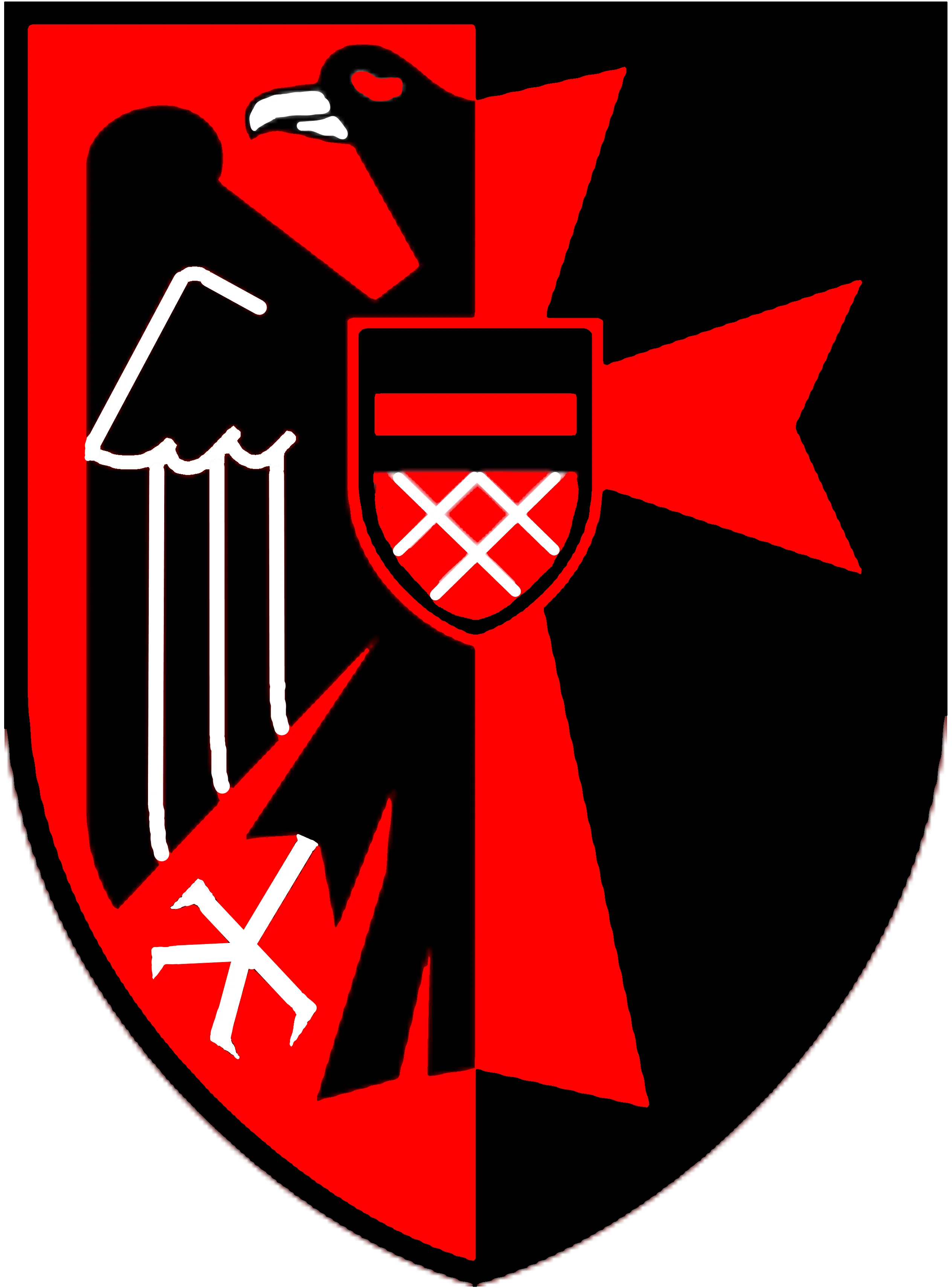 Coat of Arms of the Sudeten Germans
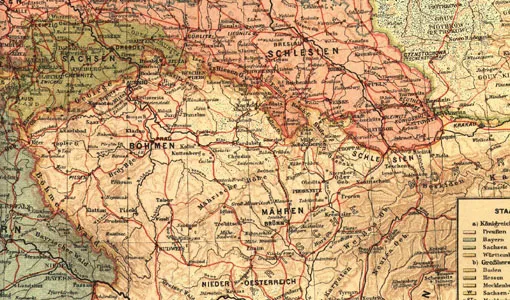 Overview Map of the Sudeten Region